Wealthy Pot
Best Strategies to Maximize Compound Interest and Grow Your Wealth
Introduction
“Want to make your money work for you? Discover the best compound interest strategies that help you grow wealth faster, with minimal effort.”
For building wealth, few forces are as potent, or as misunderstood, as compounding. Compounding can turn modest, consistent contributions into impressive sums over time, and its effects grow exponentially the longer you remain invested. But what if you feel late to the party? Is it still possible to catch up and use compounding effectively? In this article, we’ll explore how starting early stacks up against getting a late start, how you can still make strides if you’re behind, and why it’s never too late to apply this timeless principle of wealth building.
Why Compounding Is So Powerful
Compounding, at its core, is the process by which an initial investment, along with its accrued interest or returns, begins to earn returns of its own. Think of it as a snowball rolling downhill: as it picks up snow (returns), it grows bigger, which means it can gather more snow in the future, and the cycle continues (learn more at Investopedia).
- Growth on Growth: Instead of merely earning interest on your principal, you also earn interest on your interest, creating a self-reinforcing cycle of growth.
- Time Amplification: The longer your money is invested, the faster and more dramatically it can grow. This is why time is often referred to as the secret ingredient in building wealth.
- Consistency Multiplier: Steady contributions can turn small amounts into significant nest eggs, especially when combined with a reasonable rate of return over many years.
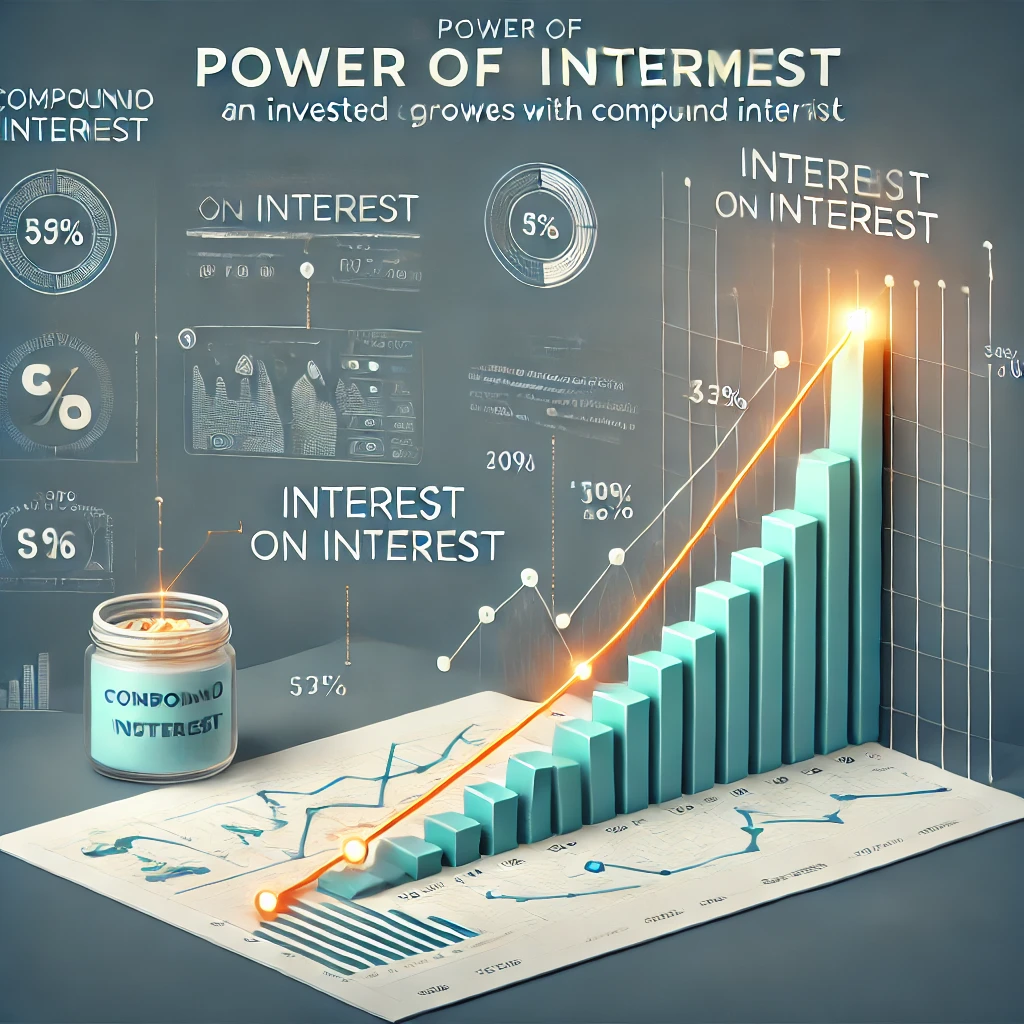
This “interest on interest” effect is why traditional advice emphasizes early saving for retirement. But does that mean you’re doomed if you start later? Not necessarily. Let’s see how early and late starts stack up.
Starting Early: Key Advantages
- A Head Start on Growth
Starting your investment journey in your 20s or early 30s gives you decades for your money to compound. Even small amounts can become substantial after 30 or 40 years.Example: A 25-year-old investing $200 per month at an 8% average annual return could accumulate a significantly larger sum by age 65 compared to someone starting the same monthly contributions at 35 or 45. - Lower Monthly Contributions Needed
Thanks to a longer runway, early investors can afford to invest smaller monthly amounts while still reaching the same milestones. For instance, if you aim for a $1 million retirement fund, starting at 25 often requires lower monthly contributions than starting at 45, simply because of how much longer your contributions can grow. - Psychological Benefits
Having more time not only benefits your finances; it can also reduce stress. Starting early often means that market downturns are less terrifying because you have more time to recover. A longer timeline also gives you emotional breathing room to experiment, refine your strategy, and learn from mistakes without completely derailing your goals. - The Flexibility to Pause or Pivot
Life can throw curveballs, health issues, unexpected expenses, career changes. When you start early, you have more flexibility to temporarily pause contributions or pivot to a different strategy without permanently jeopardizing your end goals. The cushion of time can be a powerful safety net.
Catching Up Late: Potential Approaches
Many people don’t fully tap compounding’s potential until later in life. Perhaps you were focused on paying down student debt, dealing with high living costs, or simply unaware of the importance of investing. If that’s you, take heart: while it’s true you won’t reap as much benefit from compounding’s time factor, there are still strategies to close the gap.
- Increase Your Contribution Rate
Without the luxury of a long time horizon, you’ll likely need to contribute more aggressively. That might mean tightening your budget or finding ways to increase your income, like taking on a side hustle or negotiating a raise, to free up more cash for investments. - Optimize Your Asset Allocation
Investors who start later might choose a slightly more aggressive portfolio mix to seek higher returns. This approach can be riskier, but an increased equity allocation may help you catch up. Be sure you’re comfortable with the potential volatility, though. A strong plan typically involves balancing growth potential with the realities of your age, retirement timeline, and risk tolerance. - Delay Retirement or Other Financial Goals
Another strategy to let your funds keep compounding is to postpone certain goals, like retirement, by a few years. Delaying retirement even by two or three years can significantly boost your eventual nest egg because you’re both contributing longer and giving your existing investments more time to compound. - Take Advantage of Tax-Advantaged Accounts
If you’re a late starter in the United States, consider maxing out 401(k)s, IRAs, or Roth IRAs. If you’re over 50, you can make catch-up contributions to these accounts (details at IRS). The tax benefits and additional contribution allowances can help accelerate your investment growth. - Automate Your Savings
Automating contributions ensures you consistently invest without the temptation to skip a month or two. Late starters especially need consistency. By setting up an automatic transfer into your brokerage, retirement, or savings account, you remove the hassle and emotional friction from the process.
Worked Examples and Illustrations
The Math Behind Compounding
The numbers below come from one simple formula. You don't need to run it by hand, the calculator does that, but seeing it demystifies the "magic":
A = P (1 + r/n)^(nt)- A = the final amount (principal + interest)
- P = your starting principal
- r = the annual interest rate, as a decimal (7% = 0.07)
- n = how many times interest compounds per year (monthly = 12)
- t = the number of years invested
The exponent (nt) is where the power lives: every extra year and every extra compounding period multiplies on top of everything before it. That's why time, the t in the formula, matters more than the rate for most people.
| Investor | Startage | Yearsofcontribution | Annualcontribution | Interestrate | Totalinvested | Finalvalueat65 | Totalyearsinvested | Totalinterestearned |
|---|---|---|---|---|---|---|---|---|
| Early Emma | 25 | 10 (25-35) | $5,000 | 7% | $50,000 | $525,876 | 10 | $475,876 |
| Consistent Chris | 30 | 35 (30-65) | $5,000 | 7% | $175,000 | $691,184 | 35 | $516,184 |
| Late Larry | 35 | 30 (35-65) | $5,000 | 7% | $150,000 | $472,304 | 30 | $322,304 |
| Aggressive Alex | 40 | 25 (40-65) | $10,000 | 7% | $250,000 | $632,490 | 25 | $382,490 |
To highlight the difference between starting early and catching up late, here is a second illustration using monthly contributions:
- Starter Sam: Contributes $200 a month starting at age 25 at an 8% annual return. By age 65, that could grow to roughly $703,000.
- Waiting Wendy: Contributes the same $200 a month but starts at age 35 at an 8% annual return. By age 65, she’d have around $300,000, less than half of Sam’s total, despite investing only ten fewer years.
If Wendy wanted to match Sam’s $703,000 at age 65, she might have to double or triple her monthly contributions, accept higher risk for a higher expected return, or work past 65.
Try it yourself: use our free compound interest calculator to model your own start age, monthly contribution, expected return, and time horizon.
Note: These are simplified examples, assuming a constant rate of return and ignoring factors like taxes and fees. Real-world results will vary, but the illustration underscores the fundamental point: time matters.
Strategies for Maximizing Compound Returns
Regardless of whether you start early or late, these best practices can help you optimize your gains:
- Consistent Contributions
Make regular investments, even if they’re small. Consistency over time is key to compounding. - Avoid Emotional Investing
Market downturns can lead to panic selling, which locks in losses. Consider a balanced approach that keeps you invested through ups and downs. - Reinvest Dividends
If you’re investing in stocks or mutual funds that pay dividends, reinvest them to buy more shares. This reinvestment fuels the compounding process. - Monitor Fees
High fund or advisory fees can significantly reduce your returns. Look for low-cost index funds or exchange-traded funds (ETFs) to minimize expense ratios. - Increase Contributions Over Time
If your income rises, increase your contributions accordingly. Even a small bump each year can accelerate your growth.
Compound-growth checklist
- Start investing as early as possible
- Contribute consistently (e.g., monthly)
- Choose low-cost, broadly diversified investments
- Reinvest dividends and interest
- Minimize fees and taxes
- Increase contributions over time
- Stay invested for the long term
Overcoming Psychological Barriers
Investing can be an emotionally charged topic. Many potential investors feel overwhelmed by market volatility or uncertain about how to begin. Here are some mindset shifts to help:
- Embrace Small Steps: Perfection isn’t the goal; progress is. Even if you can only invest $50 a month at first, it’s better than waiting.
- Focus on the Long Term: Understand that markets fluctuate daily, but compounding rewards patience and a long-term view.
- Educate Yourself: Familiarize yourself with basic investment principles, stocks, bonds, mutual funds, ETFs, and so on. Knowledge can reduce anxiety.
- Seek Professional Guidance: If you’re unsure where to start, consider consulting a certified financial planner or a reputable wealth advisor.
Compounding Beyond Money: Life Applications
Interestingly, the principle of compounding applies to more than just money. Habits, relationships, skills, and even knowledge compound over time. The more you invest in yourself, learning new skills, building relationships, investing in health, the more you’ll reap exponential returns in every facet of life.
- Skill Development: Practicing a skill daily builds on itself; each new level of mastery opens the door to faster progress.
- Networking: A small network can expand rapidly as each contact connects you to new contacts, increasing opportunities.
- Health & Fitness: Staying active compounds over the years as you maintain mobility, strength, and overall well-being, reducing healthcare costs and improving quality of life in the long run.
Recognizing compounding’s effects in these areas can provide an additional boost of motivation to apply the principle to your finances.
Practical Steps to Start (or Ramp Up) Now
Ready to put compounding into action, whether you’re 25 or 55? Here’s how:
- Set a Clear Goal
Determine specific targets, like “I want $500,000 in my retirement account by age 60”, so you know your aim. - Create a Budget and Identify Savings
Track your monthly income and expenses, then find areas you can reduce or eliminate. This freed-up money can become your investment capital. - Choose the Right Investment Account
If you’re employed, consider a 401(k) with employer matching. Otherwise, open an IRA or brokerage account. For US-based individuals, take advantage of Roth IRAs if you meet the income requirements, since those future withdrawals are tax-free under current laws. - Select Your Investment Strategy
A balanced approach might include stocks, bonds, and possibly real estate or REITs. Younger investors often lean toward higher equity exposure; those starting later might still lean heavily on equities but should weigh the volatility risks carefully. - Automate and Increase Over Time
Set up automatic transfers for each payday. Then, whenever you get a raise or bonus, invest a portion of it immediately. - Review and Adjust Periodically
Life changes, markets change, and your goals may evolve. Reassess your plan once or twice a year to keep it aligned with your current situation.
The Power of Peer Support and Accountability

One often-overlooked resource is accountability. Engaging with like-minded individuals, either online or in local meetups, can give you the motivation to stay on track. Sharing wins, discussing setbacks, and celebrating small victories can make a huge difference in maintaining your momentum.
- Online Forums: Join personal finance communities on platforms like Reddit, Twitter, or specialized forums. You’ll discover a wealth of tips, success stories, and cautionary tales.
- Local Groups: Check if your city has personal finance clubs or investment meetups. Face-to-face interaction can be even more motivating.
- Professional Networking: If you’re employed, see if your workplace offers financial wellness programs. Some employers match contributions or provide perks that help bolster your investment strategy.
Why It’s Never Too Late
It’s easy to feel discouraged if you come to understand the strength of compounding later in life. But here’s the reality: every dollar you invest today can still work for you and generate returns that multiply. While it’s true you may not catch up to someone who started at 25 with the same contributions, you can still set yourself up for a more comfortable future than if you never take action at all.
- Meaningful Gains Can Happen Quickly: Even a five- or ten-year compounding horizon can yield sizable returns if you’re diligent and perhaps a bit more aggressive in your asset allocation.
- Social Security and Other Assets Can Complement Savings: For US retirees, Social Security or pensions can combine with your investments (find out more at ssa.gov).
- Delayed Retirement Is an Option: Working a few extra years or shifting to part-time can drastically improve your financial outlook as you allow your investments to grow further.
- Protect Yourself: Check out the U.S. Securities and Exchange Commission’s resources if you want more information about basic investor protection and education.
Conclusion
The strength of compounding is undeniable, and the earlier you start using it, the greater your potential rewards. Still, that doesn’t mean those who start later have no recourse. By increasing contributions, optimizing asset allocation, and making use of catch-up contributions in tax-advantaged accounts, late starters can make substantial progress toward their goals. Above all, remember that in personal finance, small consistent steps can lead to dramatic long-term results.
Ready to put compounding to work for you? Whether you’re just starting out or ramping up in midlife, there’s no better time to start than right now. Share this article with friends who need a boost of motivation, because the only thing better than compounding your wealth is helping others do the same.
Thank you for reading our super blog at wealthypot.com! If you found this article helpful, spread the word and help someone else discover the true power of compounding.
This article is for educational purposes only and is not investment advice. Investing involves risk, including possible loss of principal, and past performance does not guarantee future results. Consult a qualified financial professional before investing.