 Wealthy Pot
Investing Basics
Are Bonds a Good Investment? (2026)
Are bonds a good investment right now? A clear 2026 guide, what bonds pay today, the real risks (rate and inflation), the role they play in a portfolio, and how they compare to stocks.
Plain-English guides to getting started with investing, index funds, brokerage accounts, risk, and building a portfolio you can stick with.
Are bonds a good investment right now? A clear 2026 guide, what bonds pay today, the real risks (rate and inflation), the role they play in a portfolio, and how they compare to stocks.

Is investing in the Nasdaq (QQQ) a smart move? The honest case for and against the Nasdaq-100, returns, tech concentration, the 83% drawdown history, and who it actually suits.
VTI vs VOO compared with current Vanguard data: holdings, fees, overlap, and real 10-year returns. Which Vanguard index fund should you actually buy? An honest verdict.
ETF vs. index fund explained: the real differences in trading, minimums, taxes, and cost between index ETFs and index mutual funds, and which one to pick.

Is silver a good investment in 2026? The real pros and cons, how silver differs from gold, why it's more volatile, the 4 ways to buy it, and the 28% tax on gains.
Is gold a good investment in 2026? The real pros and cons, how gold compares to stocks, the 4 ways to buy it, the higher tax on gains, and how much to own.

Discover how Net Asset Value (NAV) works, its key benefits, and top strategies for maximizing your investment returns.
Discover how an Exchange-Traded Fund (ETF) works, its pros and cons, and top investing strategies. Get expert insights in this comprehensive 2026 glossary.
Discover the best compound interest strategies to build long-term wealth. Get a step-by-step checklist and free calculator
Compare growth stocks vs. value stocks, discover top strategies for your portfolio, and learn which approach suits you best. Read now!
The fundamentals that move stocks, revenue, earnings, and profit margins explained, and how to use them to judge whether a company is worth buying.
Navigate dividend taxes confidently. Learn the basics, avoid pitfalls, and invest smarter, click to unlock your investor advantage!
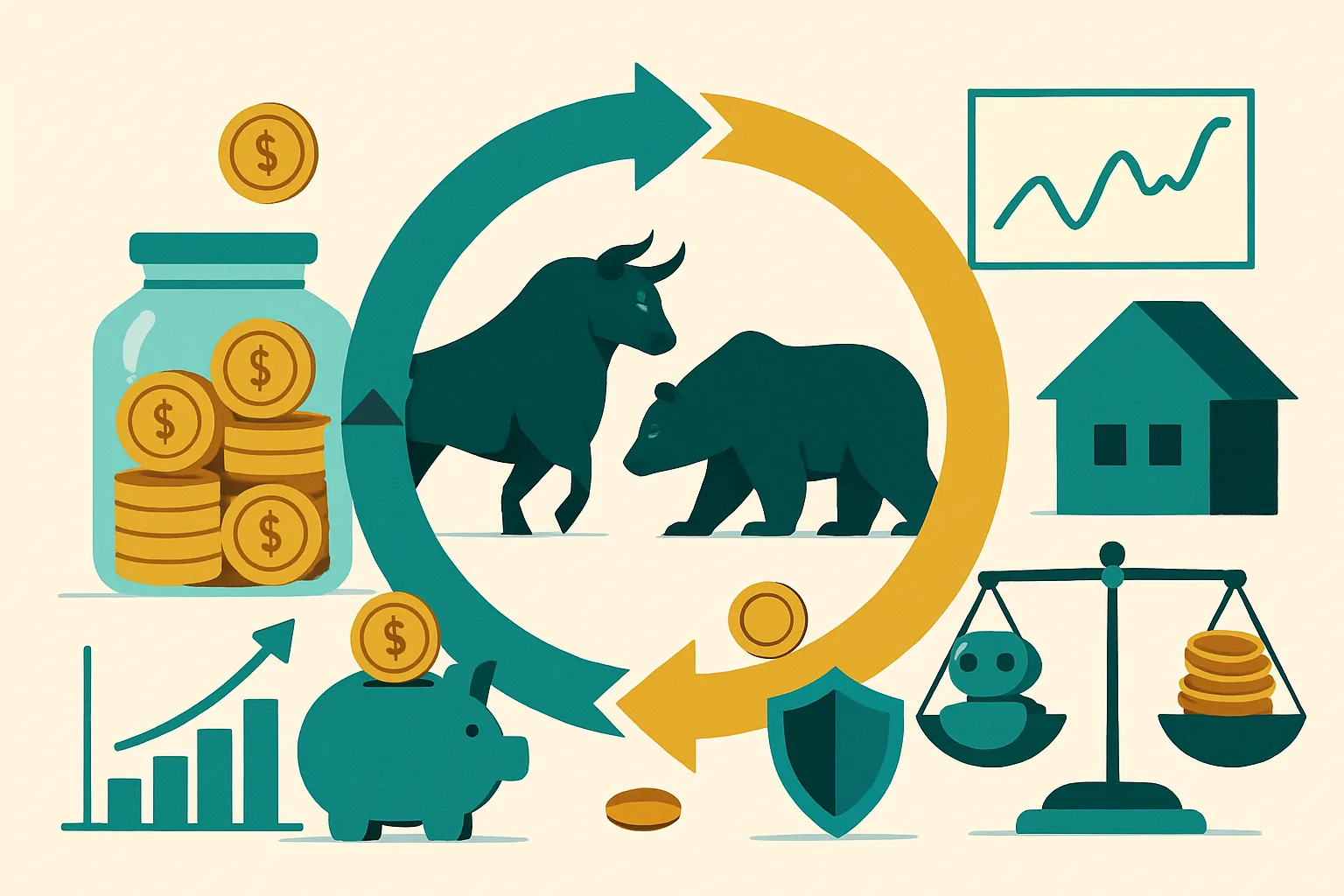
Market cycles shift between bull and bear phases. Learn key signals, risk management tactics, and strategies to navigate and profit in any market condition.
A, B, and C mutual fund share classes compared, the fees and sales loads behind each, and which class actually costs you the least.
Is the S&P 500 a smart investment in 2026? The real pros, cons, and historical returns, plus who index funds suit and how much yours could grow with our free calculator.
A beginner’s guide to ESG investing: what ESG funds are, how ESG ratings work, how to spot greenwashing, and how to get started.
Discover which account suits your goals best. Compare brokerage vs. IRA and jumpstart your investing journey today!
Discover how consistent contributions fuel long-term wealth. Start building your financial future, one step at a time. Act now!
Discover the real psychology behind ‘buying the dip.’ Learn to spot myths, seize opportunities, and invest with confidence now!
Discover how to choose a broker that fits your goals. Compare fees, explore top platforms, and ensure dedicated support. Act now!
Discover the key differences between ETNs and ETFs. Unlock new opportunities, read now to learn which fits your investment strategy!
Learn to read a stock ticker fast, what every symbol, price, and indicator means, with simple examples for beginners.
Discover if short-term investing is worth the risk. Learn strategies to grow your money fast, start planning your future now!

Learn how value, growth, and index investing can boost your portfolio. Read now and level up your financial future!
Press Esc to close · / to open