 Wealthy Pot
What is a Health Savings Account (HSA)?
A Health Savings Account (HSA) is a tax-advantaged medical savings account available to individuals enrolled in a High-Deductible Health Plan (HDHP). According to the IRS official guidelines, you can contribute pre-tax dollars to cover eligible healthcare expenses, ranging from routine doctor visits to prescription medications.
Definition
Think of an HSA as a personal savings account specifically designed for medical costs. Funds contributed are not subject to federal income tax at the time of deposit.
Primary Function
Its primary function is to help individuals manage current and future healthcare expenses. By allowing tax-free contributions and withdrawals (for qualified medical expenses), an HSA reduces the overall cost of healthcare and can also serve as a long-term investment vehicle.
How Does a Health Savings Account (HSA) Work?
Key Mechanisms
- Eligibility: You must be enrolled in a High-Deductible Health Plan (HDHP) to contribute to an HSA.
- Contributions: Contributions can be made by you, your employer, or both. These deposits are typically exempt from federal taxes.
- Withdrawals: When you use HSA funds for qualified medical expenses (e.g., doctor appointments, prescription drugs), the withdrawals remain tax-free.
Important Nuances
- Contribution Limits: The IRS sets annual limits on how much you and your employer can contribute in total. For 2026 the limit is $4,400 for self-only coverage and $8,750 for family coverage, per IRS Rev. Proc. 2025-19. If you are 55 or older you can add a further $1,000 catch-up contribution. These limits are adjusted for inflation each year, so confirm the current figure before you max out.
- Investment Opportunities: Many HSA providers allow you to invest a portion of your balance into stocks or mutual funds for potential long-term growth (similar to 401(k) or IRA accounts).
Key Features of a Health Savings Account (HSA)
Main Pros and Cons
Below is a comparison of key HSA features, highlighting their advantages and possible drawbacks:
| Feature | Pros | Cons |
|---|---|---|
| Tax Benefits | Pre-tax contributions lower your taxable income. Tax-free withdrawals for qualified expenses. | Must comply with IRS rules. Non-qualified expenses incur penalties and taxes. |
| Investment Potential | Funds can grow tax-free when invested. Can help build retirement savings. | Investment options vary by provider. Possible fees for certain investment options. |
| Flexibility | Funds roll over year to year. Can be used for a wide range of medical costs. | Must be enrolled in an HDHP. Minimum balance requirements for some providers. |
| Ownership | HSA belongs to you, not your employer. Remains active even if you switch jobs. | Employer contributions may be limited. Changing plans mid-year can affect contributions. |
Essential Details
- Portability: Unlike a Flexible Spending Account (FSA), your HSA funds remain with you indefinitely; they don’t expire at the end of the year.
- No “Use-It-or-Lose-It”: You can let the balance grow over time, earning interest or investment returns.
How to Get Started with a Health Savings Account (HSA)?
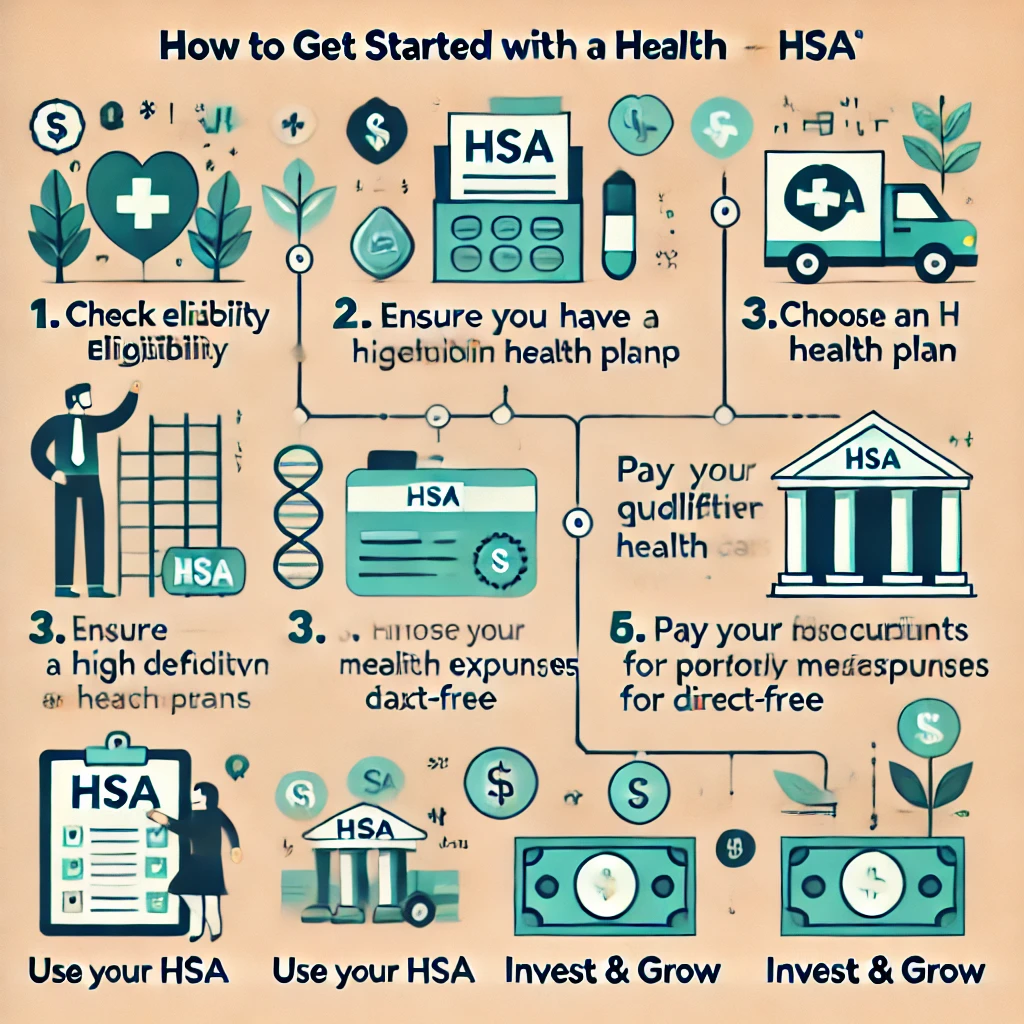
Steps for Opening/Using an Account
- Enroll in an HDHP: Confirm your insurance plan meets the IRS definition of a High-Deductible Health Plan. For 2026 that means an annual deductible of at least $1,700 for self-only coverage or $3,400 for family coverage, with annual out-of-pocket costs (deductibles, co-payments and similar amounts, but not premiums) capped at $8,500 self-only or $17,000 family.
- Choose an HSA Provider: Many banks and financial institutions offer HSA accounts. Compare fees, investment options, and digital tools.
- Fund Your Account: Contribute via payroll deductions or direct deposits. Some employers also contribute a portion to your HSA.
- Use Your Funds: Pay for qualified medical expenses using your HSA debit card or reimbursement process.
Rules and Restrictions
- You must not be enrolled in Medicare or claimed as a dependent on someone else’s tax return.
- Contributions can only be made when you meet eligibility criteria.
Legal and Tax Considerations
- Contributions are tax-deductible up to IRS limits.
- Withdrawals for non-qualified expenses may incur taxes and penalties before age 65.
Examples & Strategies for Using a Health Savings Account (HSA)
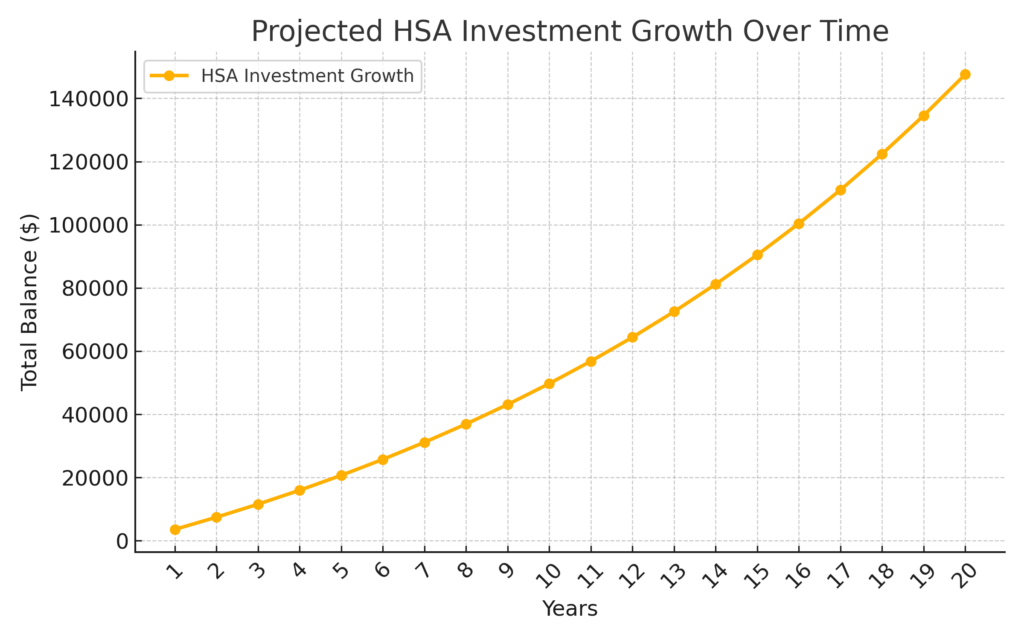
Best Practices for Maximum Benefit
- Contribute the Maximum Amount: Maximize tax savings by reaching the annual limit.
- Invest Excess Funds: After building a comfortable cash reserve, consider investing in mutual funds or other eligible assets for long-term growth.
- Keep Receipts: Maintain records of all medical expenses to prove they are qualified under IRS regulations.
- Pair with Retirement Planning: After age 65, HSA funds can be used for non-medical expenses without penalty (though they will be taxed as regular income).
Frequently Asked Questions (FAQ)
Q1: What happens to my HSA if I switch jobs?
Your HSA is portable. You own the account, so you can take it with you even if you change employers or health insurance providers.
		</div>
	</div>
	</details>
			<details		help class="sc_fs_faq sc_card     sc_fs_card__animate"
			>
				<summary>
			<h2 id="q2-can-i-use-hsa-funds-for-my-spouse-or-children">Q2: Can I use HSA funds for my spouse or children?</h2>					</summary>
			<div>
					<div class="sc_fs_faq__content">
Yes, you can generally use your HSA for eligible medical expenses for your spouse or dependents, even if they are not covered under your HDHP.
		</div>
	</div>
	</details>
			<details		help class="sc_fs_faq sc_card     sc_fs_card__animate"
			>
				<summary>
			<h2 id="q3-what-if-i-use-hsa-funds-for-non-medical-expenses">Q3: What if I use HSA funds for non-medical expenses?</h2>					</summary>
			<div>
					<div class="sc_fs_faq__content">
If you are under 65, such withdrawals are subject to income tax and a 20% penalty. After 65, non-medical withdrawals are taxed as income without penalty.
		</div>
	</div>
	</details>
			<details		help class="sc_fs_faq sc_card     sc_fs_card__animate"
			>
				<summary>
			<h2 id="q4-can-my-hsa-balance-earn-interest">Q4: Can my HSA balance earn interest?</h2>					</summary>
			<div>
					<div class="sc_fs_faq__content">
Yes. Most HSA providers offer interest-bearing accounts, and some even allow you to invest in mutual funds, stocks, or bonds once you meet a minimum balance threshold.
		</div>
	</div>
	</details>



Press Esc to close · / to open