
Debt Management
Pay off debt faster and cheaper, payoff methods, refinancing, negotiation, and staying out for good.
41 guides in Debt Management, page 1 of 2
Auto Loan Rates Today: Averages by Credit Score and 9 Lenders' Rates
The average new-car loan rate was 6.35% and used 11.19% (Experian, Q2 2026); banks charged 7.54% on 60-month new-car loans (Federal Reserve, August 2026). Rates by credit score, credit unions vs banks, 9 lenders' published rates, the new car-loan interest deduction and a car loan calculator.
Private Student Loan Rates in 2026: 8 Lenders Compared With Federal Loans
Private student loan APRs run from about 2% to 17.99% at the lenders we checked, against fixed federal rates of 6.52% (undergraduate), 8.07% (graduate) and 9.07% (PLUS) for 2026-27. Compare 8 lenders' own published ranges, cosigner release, and what changes after Grad PLUS ended on July 1, 2026.
Should I Pay Off My Car Loan Early? The Math, the Catches and a Calculator
Paying off a car loan early saves the interest you would have paid, but only on a simple-interest loan with no prepayment penalty. See what extra payments save (worked examples at average 2026 rates), how precomputed interest and the Rule of 78s work, the effect on your credit score, and when investing or an emergency fund should come first.
Voluntary Repossession: What It Is, What You Still Owe, and Better Options
Voluntary repossession means handing your car back to the lender. You can still owe a deficiency, it can stay on your credit report for up to seven years, and forgiven debt can be taxable. How it works, a worked example, and the alternatives to try first.
Chapter 7 vs. Chapter 13 Bankruptcy: Which One Fits Your Situation
Chapter 7 wipes out debts in a few months but can cost you nonexempt property; Chapter 13 keeps your property in exchange for a 3 to 5 year payment plan. The 2026 means-test income limits by state, the Chapter 13 debt limits, court fees, which debts survive, and what to try before filing.
Cosigning a Loan: What You Owe, How to Get Off It, and Safer Ways to Help
A cosigner owes the full debt plus late fees and collection costs, and the loan sits on their credit report. Here is the federal Notice to Cosigner, cosigner vs co-borrower vs authorized user, what happens if the borrower dies or files bankruptcy, how to get removed, and alternatives like lending money to family with a written note.
Debt Collectors, Charge-Offs and Old Debt: Your Rights and What to Do
What a charge-off means, how long it stays on your credit report, what debt collectors can and cannot do under the FDCPA and Regulation F, how to dispute a debt in writing, how the statute of limitations on debt works, and what to do if you are sued.
Is an Extended Car Warranty Worth It? What You're Really Buying
Most extended car warranties are vehicle service contracts, not warranties. See what the FTC and CFPB say to check before you buy, how to cancel for a prorated refund, the robocall scam, and a simple way to decide if one is worth it for you.
Medical Bills and Medical Debt: How to Check, Lower and Pay Them
How to check a medical bill against your explanation of benefits, use the No Surprises Act and the $400 good faith estimate dispute, apply for nonprofit hospital financial assistance, negotiate or set up a payment plan, and how medical debt shows up on credit reports.
Upside-Down Car Loan: How to Get Out of Negative Equity
Owe more on your car than it is worth? How to check your negative equity, why it happens, what rolling it into a trade-in really costs (worked example), and the six ways out, including what voluntary repossession leaves you owing. Based on CFPB and FTC guidance.
Wage Garnishment: How Much Can Be Taken From Your Paycheck
Federal wage garnishment limits explained: the 25% rule, the $217.50 weekly floor, child support (50% to 65%), student loans (15%), IRS levies, protected Social Security and VA benefits, and how to stop or reduce a garnishment.
HELOC Rates Today: Prime Is 7.00%, and What 10 Lenders Charge
HELOC rates are the prime rate (7.00% since September 17, 2026) plus a lender margin. Published HELOC APRs from 10 banks and credit unions run from about 6.19% to 14.49%, and fixed home equity loans from about 7.34%. Intro rates, fees, averages and a calculator.

Federal Student Loan Interest Rates 2026-27: 6.52%, 8.07% and 9.07%
Federal student loans first disbursed July 1, 2026 to June 30, 2027 carry fixed rates of 6.52% for undergraduates, 8.07% for graduate students and 9.07% for PLUS loans, plus loan fees of 1.057% and 4.228%. How the rate is set, rates since 2013, and the new 2026 borrowing limits.

Personal Loan Rates in 2026: Average APR and 11 Lenders Compared
The average bank personal loan rate was 11.90% in August 2026 (Federal Reserve), and credit unions averaged 10.64%. Lender APR ranges run from about 6% to 35.99%. Compare 11 lenders, see what fees do to your APR, and calculate payments.
Public Service Loan Forgiveness (PSLF) in 2026: Rules, Numbers and How to Apply
PSLF cancels your remaining Direct Loans tax-free after 120 qualifying payments in public service. Who qualifies, which plans count after RAP and the end of SAVE, buyback, the employer rule courts struck down, and ED's latest numbers.

Repayment Assistance Plan (RAP): Payments, Rules and Calculator
The Repayment Assistance Plan started July 1, 2026: 1% to 10% of your AGI, minus $50 per dependent, at least $10 a month, with unpaid interest waived and forgiveness after 30 years. Calculate your payment.

The SAVE Plan Is Over: What SAVE Borrowers Need to Do Now
A court vacated the SAVE plan on March 10, 2026. Its 7.5 million borrowers get at least 90 days from their servicer's notice to choose RAP, IBR or a standard plan, or they are placed on a standard plan. What to pick and what happens to your forbearance months.

Student Loan Forgiveness in 2026: Every Program That Still Works
There is no mass student loan forgiveness in 2026, but PSLF, income-driven plans and discharges still cancel loans: 1.29 million PSLF borrowers so far. What changed with RAP, the end of SAVE, taxes and collections.
HELOC vs Home Equity Loan vs Cash-Out Refinance: Which Costs Less?
Compare a HELOC, a home equity loan and a cash-out refinance side by side: how much you can borrow, monthly payments, total interest and risks. Free calculator with today's prime and mortgage rates.
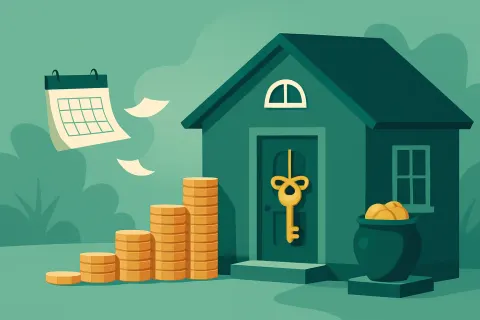
Mortgage Payoff Calculator: How Much Faster Do Extra Payments Pay Off Your Loan?
See how much sooner extra payments, biweekly payments or a lump sum pay off your mortgage, the interest you save, and the extra it takes to finish by a date. Free calculator with a full amortization schedule.
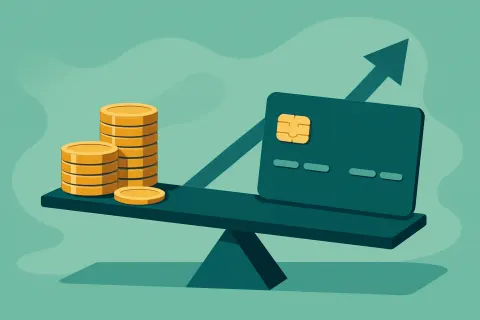
Average Credit Card Interest Rate: 21.19% APR, and 22.36% If You Carry a Balance
The average credit card APR was 21.19% in August 2026, and 22.36% on accounts paying interest (Federal Reserve). History since 2015, Fed rate link, and payoff math.
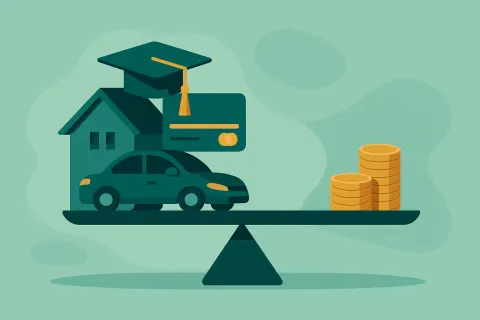
Average American Debt: Totals, Medians and Debt by Age
Americans owe $18.77 trillion (NY Fed, Q2 2026), or $63,455 per person with a credit file. Median family debt, debt by type and age, and delinquency rates.
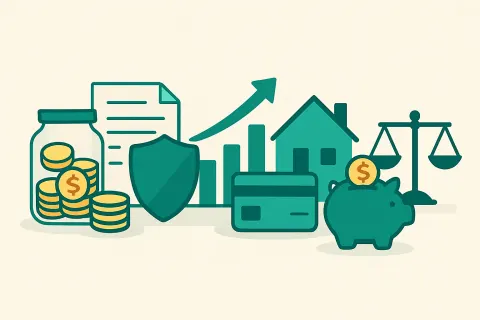
How to Pay Off Credit Card Debt: A Step-by-Step Plan
Credit card payoff calculator plus a 5-step plan. At the 22.15% average card rate, a $6,000 balance paid at the minimum can take over 20 years and cost more than $10,000 in interest. A $300 fixed payment clears it in 26 months. How to read the payoff box on your statement, pick a method, cut the rate, and avoid debt-settlement traps.
Debt Consolidation: How It Works, Your Options, and When It Backfires
Check whether consolidating your debts would save money with our calculator (your current payments vs one loan, fee included), then compare balance transfers, personal loans, home equity and debt management plans, with the CFPB's and FTC's warnings.