Financial Goals: Examples, Types and How to Prioritize Them
A financial goal is a specific thing you want your money to do, with an amount and a date attached: pay off a credit card by June, build three months of expenses in savings, or retire at a certain age. Budgeting is how you fund those goals, and most people struggle less with setting goals than with deciding which one to fund first. A good budgeting app makes it easier to see where your money goes and steer it toward the goals that matter most. Should you tackle debt, boost your emergency fund, invest for retirement, or save for big-ticket items like a car or a home? Understanding how to prioritize financial goals in your budget is the key to making consistent progress toward the life you envision.
This guide defines financial goals, gives short-term and long-term examples, walks through one SMART goal step by step, and then shows how to rank your goals and fit them into your budget.
What Is a Financial Goal?
A financial goal is a target for saving, paying down debt or investing that has three parts: what the money is for, how much you need, and when you need it. "Save more" is a wish. "Save $X for a car by next August" is a goal, because you can work out a monthly amount and check whether you are on track.
Goals matter because most households have less cushion than they would like. In the Federal Reserve's survey of 2025, 63 percent of adults said they would cover a hypothetical $400 expense using only cash, savings or a credit card paid off at the next statement. Fifty-five percent said they had set aside three months of expenses in an emergency or "rainy day" fund, and 35 percent of non-retirees thought their retirement savings plan was on track (Federal Reserve, Economic Well-Being of U.S. Households in 2025, May 2026).
Without specific targets, like saving for a down payment or paying off student loans, budgeting often becomes a disorganized exercise of merely tracking expenses. Clear goals help in three ways:
- Clarity and Motivation
When you have well-defined goals, each budget category feels purposeful rather than restrictive. You understand the “why” behind the spending limits. - Accountability
Goals make it easier to track your progress and hold yourself accountable. You can see where your money is going and quickly adjust if you’re veering off-track. - Long-Term Vision
Day-to-day expenses can overshadow future needs. Prioritizing financial goals ensures that your long-term well-being, such as retirement or your children’s education, remains at the forefront.
Short-Term and Long-Term Financial Goals
Financial objectives typically fall into three broad categories: short-term, mid-term, and long-term. Each category serves a specific purpose, and understanding these will help you distribute funds more effectively within your budget.
Short-Term Goals (Up to 1 Year)
Short-term goals usually involve immediate or near-future needs.
- Examples: Building a starter emergency fund, paying off a small credit card balance, saving for a vacation or holiday gifts, setting aside money for an annual bill such as car insurance, or getting current on overdue bills.
- Why They Matter: Quick wins can be motivating. Achieving short-term objectives builds confidence and momentum.
Mid-Term Goals (1 to 5 Years)
Mid-term goals have a slightly longer horizon.
- Examples: A down payment on a house, a car bought with cash instead of a loan, paying off student loans or a car loan, funding career development courses, or saving for a family event like a wedding.
- Why They Matter: These goals often require consistent monthly contributions. Balancing them with short-term priorities and everyday expenses can be challenging but highly rewarding.
Long-Term Goals (5+ Years)
Long-term goals lay the foundation for financial security and future freedom.
- Examples: Retirement savings, paying off a mortgage early, long-term investments, and establishing a college fund. Retirement goals are usually the largest. Our retirement savings by age page shows what households actually hold, and budgeting for long-term savings goals covers how to build a monthly savings plan for them.
- Why They Matter: The earlier you start, the longer your savings have to grow, so starting small early can matter more than the amount.
SMART Financial Goals: A Worked Example
SMART is a simple check that turns a vague wish into a goal you can budget for: Specific, Measurable, Achievable, Relevant and Time-bound. The table takes one short-term goal through each step. The numbers are a hypothetical example we chose; use your own expenses and income.
| Step | Question to ask | Hypothetical example: a starter emergency fund |
|---|---|---|
| Wish | What do I want? | "I want some savings for emergencies." |
| Specific | What exactly, and for what? | A starter emergency fund in a separate savings account, used only for unplanned costs such as a car repair. |
| Measurable | How much? | $3,000, about one month of essential expenses for this household. |
| Achievable | Does the budget allow it? | $250 a month ($3,000 / 12), taken from the dining-out and subscriptions categories. |
| Relevant | Why this goal now? | An unexpected bill would otherwise go on a credit card, which works against the debt goal. |
| Time-bound | By when? | 12 months, with a check at month 6 ($1,500 saved). |
| SMART goal | Put it together | "Save $3,000 in a separate emergency account by moving $250 there on the first of each month for 12 months." |
The same steps work for a long-term goal. "Retire comfortably" becomes a specific yearly contribution to a 401(k) or IRA, reviewed once a year. Write each goal down in this form before you rank them, because the monthly amount is what you will fit into the budget.
Evaluating Your Current Financial Situation
Before you start allocating funds to specific goals, you must assess your overall financial standing. A clear picture of your income, debts, and regular expenses sets the stage for more effective prioritization.
- Calculate Your Monthly Net Income
- Include all sources of income: salary, side hustles, and passive earnings.
- Focus on the amount that actually lands in your bank account after taxes and deductions.
- List Your Expenses
- Separate essential expenses (rent/mortgage, utilities, groceries, transportation) from discretionary expenses (entertainment, dining out).
- This helps identify areas where you can cut back to redirect funds toward your financial goals.
- Determine Your Net Worth
- Assets: Checking and savings accounts, retirement funds, property, and any other valuable possessions.
- Liabilities: Mortgages, student loans, credit card balances, and other debts.
- Subtract your liabilities from your assets to find your net worth. This number gives you a “big picture” sense of financial health.
Creating a Hierarchy of Financial Goals
Not all financial goals carry the same weight. Some are urgent, while others can wait. Creating a hierarchy ensures you allocate funds to the goals that matter most.
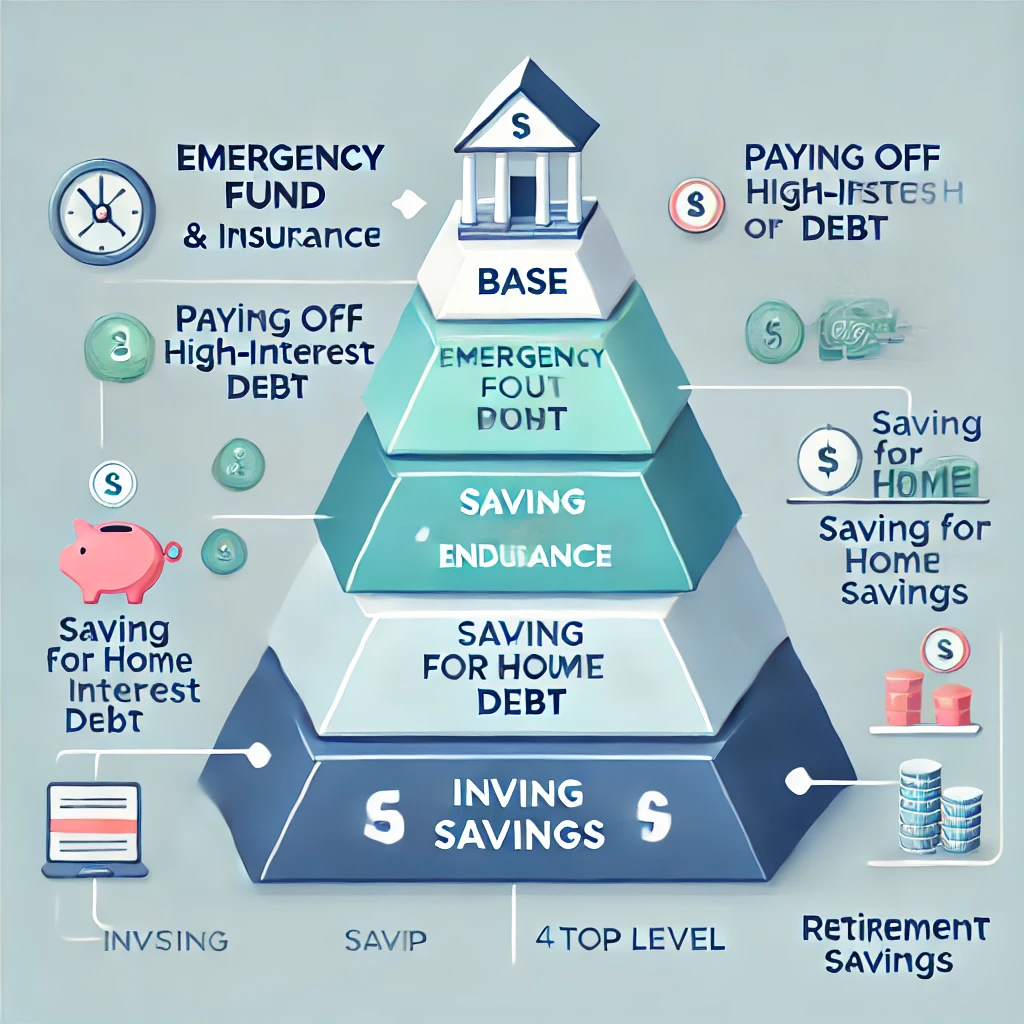
- Immediate Safety Goals
- Emergency Fund: Build savings you can reach quickly, starting with a small starter fund and working toward several months of living expenses. The Federal Reserve uses three months of expenses as one common measure of financial resiliency. This safety net prevents financial setbacks from spiraling into bigger problems. See how to build an emergency fund.
- Essential Insurance: Life, health, and property insurance protect you against catastrophic losses.
- High-Priority Goals
- Debt Repayment: Focus on high-interest debt first (e.g., credit cards, payday loans). The faster you clear these, the more money you free up for savings and investments.
- Retirement Savings: Contribute to a 401(k) or IRA, especially if your employer offers a match. Time is a key factor in building a strong retirement fund.
- Medium-Priority Goals
- Homeownership: If buying a home is a priority, start saving for a down payment and closing costs.
- Education Funds: For yourself or your children, depending on your life stage and goals.
- Lower-Priority Goals
- Lifestyle Upgrades: Vacations, nicer cars, or non-essential hobbies typically come after you have stable savings and moderate to low debt.
- Speculative Investments: High-risk, high-reward opportunities should only be considered if you have a solid financial foundation.
Allocating Your Budget According to Priorities
Once you have a clear hierarchy, it’s time to map your money to each goal. The exact percentage you allocate will vary based on your income, cost of living, and personal preferences.
- Consider a Budgeting Framework
- 50/30/20 Rule: 50% of your net income for essentials, 30% for wants, 20% for savings/debt repayment. Modify the percentages as needed, especially if you have aggressive financial goals.
- Zero-Based Budgeting: Assign every dollar a specific task (e.g., rent, groceries, savings, debt). This method requires thorough planning and discipline but can yield excellent results.
- Automate Where Possible
- Set up automatic transfers for savings and debt payments.
- Automation reduces the temptation to spend money you intended to save.
- Track Discretionary Spending
- Apps and expense trackers can keep you aware of how much you spend on non-essentials.
- If you exceed your discretionary limit, it’s a cue to reassess your spending patterns.
- Revisit and Adjust
- Monthly Reviews: Compare actual spending to your budget. Adjust allocations as needed to stay aligned with your goals.
- Life Changes: Major events like marriage, relocation, or job changes can require a budget overhaul.
Sample Budget Categories and Recommended Allocation
Below is a hypothetical example of how you might allocate funds toward different financial goals. The percentages are an illustration, not a rule; set your own from your income and expenses:
| Goal / Expense Category | Time Horizon | Example Share |
|---|---|---|
| Emergency Fund | Ongoing | 5% |
| High-Interest Debt | 1-2 years | 10% |
| Retirement Savings | 30+ years | 10% |
| Mid-Term Savings (Home) | 2-5 years | 10% |
| Education Fund | 5-10 years | 5% |
| Discretionary Spending | N/A | 10% |
| Essential Living Expenses | Monthly | 50% |
| Total | 100% |
Maintaining Momentum and Motivation
Budgeting is not merely about limiting your outflow; it’s a strategy to allocate your resources to what truly matters to you. Maintaining motivation over the long haul can be challenging, so consider these techniques:
- Visual Reminders
Post a photo that represents your primary goal, be it a new home, a dream vacation, or a debt-free life, somewhere you can see it daily, with the concrete step written beside it. For a savings goal, a progress chart with each milestone marked works the same way. - Celebrate Milestones
When you pay off a debt or hit a savings milestone, treat yourself to something modest yet meaningful. This positive reinforcement builds excitement for the next goal.
Common Mistakes to Avoid
- Ignoring an Emergency Fund
Skipping this step can lead to spiraling debt if an unexpected expense arises. - Underestimating Monthly Expenses
Poor tracking of groceries, utilities, or subscriptions can throw off your entire plan. - Focusing Solely on Debt
While it’s essential to eliminate high-interest debt, neglecting long-term savings can hurt you in the long run. - Overcommitting to Savings
If you allocate too much to savings without leaving room for fun or unplanned events, you may burn out and revert to old spending habits. - Failing to Reassess and Reprioritize
Life changes, big or small, can quickly shift your financial focus. Regularly review and adjust your budget.
Frequently Asked Questions
What are examples of financial goals?
Common short-term goals are a starter emergency fund and paying off a small credit card balance. Mid-term goals include a down payment or paying off a car or student loan. Long-term goals include retirement savings, a college fund and paying off a mortgage.
What is the difference between short-term and long-term financial goals?
The time frame. In this guide, short-term means up to a year, mid-term one to five years and long-term more than five years. Money for short-term goals usually stays in savings; long-term goals can be invested because there is time to ride out market swings.
Which financial goal should come first?
For most people: a starter emergency fund, then high-interest debt and any employer retirement match, then larger savings goals. Adjust the order for your own situation.
Conclusion: Achieving Financial Success Through Priority Budgeting
Figuring out how to prioritize financial goals in your budget requires thoughtful analysis, consistent tracking, and the ability to adapt. By defining each goal with an amount and a date, evaluating your current financial status, and allocating resources according to a well-defined hierarchy, you create a realistic and motivating plan.
Remember to celebrate milestones and stay flexible as your circumstances change. With discipline and clarity, your budget becomes the tool that moves you toward each goal.
Sources
- Board of Governors of the Federal Reserve System, Economic Well-Being of U.S. Households in 2025: Savings and Investments and Executive Summary, May 2026, read November 7, 2026.
- Investor.gov (U.S. Securities and Exchange Commission): https://www.investor.gov/
This article is for educational purposes only and is not personalized financial advice. The SMART goal and budget percentages are hypothetical examples. Consult a qualified financial professional about your specific situation.